Et cetera
Grit: Living Life as a Marathon
Grit is the personal characteristic that combines passion and perseverance. It is the disposition to sustain interest in and effort toward long-term goals.* It is stick-to-it-iveness. Grit is living life as a marathon, not a sprint.
Finishing Strong includes doing everything humanly possibly starting today to ensure your healthspan equals your lifespan.
*Grit, Angela Duckworth, Simon & Shuster, 2016
Sleep
The key drivers of sleep are quantity and quality. Using sleep quality and quantity measuring tools, experiment for the quantity of sleep that is optimum for you. Your optimal range may be anywhere from 7 to 9 hours. Once you have determined this metric, work on quality: go to bed and get up at the same time each day; remove sleep disruptors; no eating within 3 hours of bedtime, no screen time within 2 hours of bedtime. And for sure no TV in bed.

Exercise
There are two inherent tensions to getting a 60-minute workout each day. The first is, I have no free time now, where am I going to get the 60 minutes? The second tension is what am I going to do that will fill up 60 minutes?
The answer to the first tension is discipline. Do you want your Last Watch to be as productive and fulfilling as the one you are in now? Or are you satisfied with encroaching entropy that will sap your intellect and have your schedule consumed with healthcare? This is binary discipline. If you intend to finish strong you will find the time. Give up something. Get up earlier.
The second tension often manifests this way: all the authorities I listen to (Heart Association, CDC, etc.) recommend a 30-minute walk 3 times a week. And I already do that. With what will I fill 60 minutes 7 days a week? First understand that 30 minutes 3 times a week is totally insufficient. 30 minutes is a warmup. Any single exercise session needs to be at least 60 minutes to have impact.
Each of us must find our own individual rhythm. There are two types of exercise, strength and cardio. Ideally these are done on consecutive rotating days. Here is our story. Remember, strength training includes stretching. We were already doing alternating days of 90 minutes of strength training and at least 30 minutes of cardio (full on biking or hiking). And working in 30 minutes of stretching when we could. Two frustrations. How to fill up the cardio days? And how to get more of the critical stretching? The solution had three components. First, we divided the existing 90-minute strength routine into two 45-minute routines. What was one routine with 16 individual sets became two 8 set routines. Second, we added 30 minutes to the cardio days. 60 minutes of high intensity cycling or hiking. Finally, we split the stretch routine into two 15-minute routines and added each to the revamped 45-minute strength routines. Voilà! Alternating 60 minute days of strength (including stretch) and cardio.

Eating
We don’t live to eat. We eat to live. Pick a simple eating plan that excludes or limits bread, sugar, alcohol. We recommend a high protein, low carbohydrate eating plan. Caloric intake matters. Weight and Finish Strong health are the drivers. If losing weight is a goal, be realistic in what can be accomplished in this period; 10 pounds in 40 days would be phenomenal.
Establish a regimen of natural dietary supplements to ensure that you get the vitamins and minerals needed to maintain a healthy body and immune system.
Intermittent fasting is a great tool to manage healthy eating, and it can contribute to sleep hygiene. This means targeting 14, 16 or more hours between the last meal (or snack) of the day and when you break the fast the next morning. Other fasting (turning away from toys, smartphones, or other worldly pursuits) promotes spiritual growth and mental health.

Metrics
Measure what matters. Choose two or three high-impact metrics that align with your short-term goals (strength, discipline, body composition, recovery) and your long-range aim of Finishing Strong. Beginning weight, daily caloric intake, protein, hydration, and exercise volume are practical starting points. Learn to rate your exertion (RPE) and track a few consistent exercise metrics.
Consistency of method matters more than sophistication. A printed calendar, a simple notebook, or reliable apps work well. We recommend myNetDiary (diet, protein, fiber, water), Fitbod (strength training), and Garmin Connect or Apple Fitness/Health (activity and recovery data). Note that Garmin Connect requires a compatible device.
We divide metrics into three categories based on impact and time. Pick the ones aligned with the goals you intend to achieve. Ensure VO2 max is in the mix.
Short-term metrics (Daily / weekly tracking; generally responsive within the 40 days)
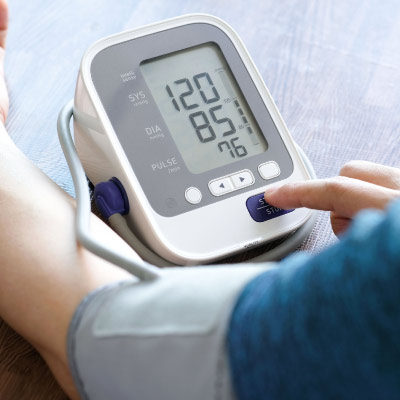
- Blood pressure: take readings at consistent times, daily if elevated, otherwise weekly.
- Waist-to-height ratio (WHtR): simple tape-measure method; target <0.5 is a widely supported healthspan threshold.
- Grip strength: measured with an inexpensive hand dynamometer; excellent proxy for overall muscle strength, neuromuscular function, and physiological reserve.
- Resting heart rate: first thing in the morning; lower values (roughly 50–65 bpm for many healthy adults) generally reflect better cardiovascular efficiency and recovery.
- Basic functional tests: push-up or plank progress, timed sit-to-stand, or similar movements aligned with the challenge.
Medium and long-term metrics (Trend tracking over weeks / months)
- VO2 max: the strongest single predictor of all-cause mortality and cardiorespiratory fitness among practical metrics. Lab testing with a mask is most accurate; everyday estimates from Garmin or Apple devices are sufficient for trends and for the 40 Day Grit Challenge. Field tests such as the Rockport Walk Test plus an online calculator also provide workable estimates. Prioritize VO2 max in your mix.
- Heart-rate variability (HRV): trends useful for recovery, stress load, and sleep quality.
- Functional or strength benchmarks that reflect sustained capacity (e.g., loaded carries, longer plank holds, or aerobic field tests).
Other (periodic)
- Blood markers: baseline and follow-up checks of fasting glucose or HbA1c, a basic lipid panel (or ApoB if available), and hs-CRP give insight into metabolic and inflammatory foundations. Not required for every 40-day aspirant, but valuable for long-term healthspan. These markers respond downstream of the diet, exercise, sleep, and hydration habits of the 40 Day Grit Challenge.
- Body-composition estimates: smart-scale trends for directionality, or occasional DEXA (when accessible) focused on lean mass and visceral fat rather than scale weight alone.
Select a small, sustainable set. Track consistently with the same method. Review trends at the end of the 40 days and at longer intervals to confirm you are building Finish Strong capacity.
Healthcare
Manage your healthcare assiduously. Be your own healthcare professional, sufficiently familiar with your medical health and its management that you seek your internist primarily for second opinions and referrals.
The doctor of the future will give no medicine but will involve the patient in the proper use of food, fresh air, and exercise (Thomas A. Edison (1847 – 1931)). Good medicine used to be about smart doctors telling patients which prescriptions to take. Now the best medicine is smart patients telling doctors which prescriptions they don’t need.

Stress And Alternate Stress: And Now For Something Completely Different
Stress is an inevitable fact of life whether you were hunting dinner in pre-historic times or trying to satisfy a cranky boss in the 21st century. And contrary to conventional wisdom, stress is not bad. There is stress and alternate stress. The key is getting a balanced helping of each daily. The inevitable stress of life needs to be balanced with alternate stresses. Exercise, hobbies, social network activities, etc. The workouts and reading disciplines of the Finish Strong 40-Day Grit Challenge are key alternate stresses.

Mental Wellbeing | Social Networks
Why do milk stools have three legs? In the tight quarters that are typical while milking a cow, three legs are more stable and less prone to tipping over during maneuvers. See here.
If sleep and exercise are two legs of the Finish Strong stool, mental wellbeing is the third. Mental wellbeing is achieved by having a clearly worked out worldview (belief system), a clear mission with goals, and a strong social network. A strong social network is comprised of supportive family and friends with whom you have a healthy and active relationship. This is not to be confused with social media networks. How to tell the difference? You actually sit in the same room as those in your social network.
Social networks can include, but are not limited to, volunteering at a community non-profit, toastmasters, sports leagues, chess club, and the PTA. For Christian Believers the social network is often satisfied by healthy and active church networks.

Honoring God
The Finish Strong 40-day Grit Challenge works well for both the Christian Believer and non-believer.
The Believer has two advantages. First, the Believer has extra motivation. He knows why he is striving to Finish Strong. He has been charged by Jesus with the Great Commission. Carrying out that commission is less fruitful if we are not flourishing physically and mentally.
The second advantage is this: if you are a practicing Believer, you will be spending time with God each day in reading and prayer. The choice of whether you accept Jesus Christ as your Lord and Savior is yours. But the Bible is the Owner’s Manual for Creation. It is how things work. And as a bonus: It is Truth. Your Bible reading each day satisfies the daily Reading discipline.
Embrace the privilege of age (Joshua 14:10-11). Be a good steward of your health. We should strive to ensure that our Last Watch this side of eternity are rich and rewarding. That is bringing honor and glory to God.

40 Day Grit Or 75 Hard?
We must be honest. We modelled the 40 Day Grit Challenge after 75 Hard. 75 Hard is a popular social media trend. Promoted as a mental toughness challenge, it is comprised of five non-negotiable tasks which must be completed each day for 75 days. There are no mulligans. If you skip a day or miss a task, you must start over at day one. The 40 Day Grit Challenge is the 75 Hard for the rest of us.
The 75 Hard tasks:
-
- Diet: Choose a diet, any (presumably healthy) diet, and stick to it. No alcohol, no cheat meals.
- Workouts: Complete two 45-minute workouts per day, one of them outdoors no matter what the weather.
- Hydration: Drink a gallon (128 oz / 3.8 liters) of water each day.
- Read: 10 pages of inspirational non-fiction each day.
- Progress Photos: Take a progress picture daily to track your physical changes.
The 75 Hard challenge is, by definition, hard. Designed as a mental toughness program, it appears to have a bit of an identity crisis. Is it mental or physical? The "inspirational non-fiction" reading is a little open ended. Some of it, like uploading a picture of yourself each day, smudges the distinction between a fitness program and a mental toughness challenge. And it seems a little hokey. Like sending your DNA to 23 And Me.
75 Hard is a decent concept. But we concluded that 75 Hard may be too much of a good thing for the rest of us (Note 1). And that it lacks a clearly defined end-game. That it could use a makeover itself. Herewith, then, the Finish Strong 40-Day Grit Challenge. A 75 Hard for the rest of us. Feel free to make it an 80-day challenge by repeating it twice. Or make it a lifestyle.
Note 1: There is a 75 Soft, but that seems to defeat the purpose. If 75 Hard makes you into a new person, what will 75 Soft do? The implication is that it is for weaklings, which does nothing for mental wellbeing.
The Hudson Bay Start
On May 2, 1670, Charles II, King of England, granted a charter to the Hudson’s Bay Company (alternatively “HBC” or “The Company of Adventurers of England Trading into Hudson’s Bay”). The charter provided the Company exclusive trading rights in the Hudson Bay Watershed of North America, an area covering over half of modern-day Canada, from Alberta in the west to the Labrador Sea in the east.
Until its winding up in 2025, HBC had among its distinctions being the oldest operating company in North America. Much of their early trading (primarily 1670–1870) was conducted by large-scale fur trading expeditions via canoe and portage on the rivers throughout the Watershed. These expeditions set out from their posts along the shores of Hudson Bay.
In this part of Canada, sometimes referred to as ‘north of summer,’ having the right supplies in the correct amounts was literally a matter of survival. The scale and risk of the expeditions required meticulous planning and execution. Lives and profits hung in the balance, and the Company’s survival depended on productive and completed expeditions.
The expedition team set out on the first day traveling only a short distance, often only a few miles, before setting up camp for the night. This shake-out run allowed the voyageurs to confirm that nothing had been forgotten, and that all the men and equipment were working and sufficient for the journey. Necessary corrections could easily be made with a short trip back to base. Thus was born 'The Hudson Bay Start’ (sometimes ‘Hudson Bay Start’).
Why are we including this history lesson here?
Anyone at any age and in any condition can benefit from four of the five Finish Strong disciplines (sleep, diet, hydration, reading). They can be completed by anyone in almost any circumstance. But let’s say you are using the challenge for post-surgery recovery, to make up for a perennial lack of exercise, or you have other health issues that will not allow you to start at 60-minutes of exercise right out of the gate. Here is what to do: Use a modified Hudson Bay Start (MHBS) for the exercise component. Start with 10 minutes of exercise each day. Do it for a week. Add 2 minutes. Or 5. Go.
Pushing The 40%
Navy Seal David Goggins’s 40% Rule, popularized in his book Can’t Hurt Me, is simple; it states that when your mind is telling you that you’re done, that you’re exhausted, that you cannot possibly go any further, you’ve actually only reached about 40% of your true potential. The first wave of fatigue is largely mental, a protective mechanism to keep you in your comfort zone, leaving 60% or more still untapped if you push through it.
Goggins developed this mindset during grueling Navy SEAL training and ultra-endurance events, using it to build mental toughness by overriding self-limiting thoughts. Pushing past the 40% is a mental framework to overcome self-imposed limits in exercise, work, or life by embracing discomfort and finding hidden reserves of strength.